In today’s fast-paced digital landscape, speed, agility, and adaptability are critical for success. Low-code and no-code platforms are reshaping how software is created, enabling both developers and non-technical users to build functional applications quickly and efficiently, without the need for extensive coding.
Low-code platforms are designed to minimize the amount of hand-coding required, giving developers tools that accelerate application development while maintaining flexibility for customization. They are especially useful for organizations seeking to reduce repetitive coding tasks without sacrificing control. No-code platforms, in contrast, focus on simplicity and accessibility, offering intuitive drag-and-drop interfaces that allow non-developers to design and launch applications with ease. Platforms such as OutSystems, Mendix, and Microsoft Power Apps exemplify the low-code approach, while Bubble, Zapier, and Webflow highlight the power of no-code solutions.
The benefits of these platforms are far-reaching. They dramatically reduce time-to-market, allowing businesses to deliver solutions at unprecedented speed. Development costs are significantly lower, as projects demand fewer technical resources. Beyond efficiency, these platforms democratize innovation by empowering employees across different departments to participate in software creation. This rise of so-called “citizen developers” enables organizations to solve problems more directly while fostering stronger collaboration between business teams and IT professionals.
Practical applications of low-code and no-code platforms are already widespread. They are used to create internal business tools that

Despite their advantages, these platforms are not without limitations. Scalability remains a concern, particularly for enterprise-level applications that demand high performance and resilience. Security and compliance risks also need to be managed carefully, especially in industries where sensitive data is involved. Furthermore, while these platforms simplify development, they may not always support complex, highly customized solutions. Organizations must also consider the risk of vendor lock-in, as relying too heavily on a single provider can create long-term dependency.
At Glomex Technologies, we are taking the promise of low-code and no-code even further. We give our clients the ability to generate their own custom software complete with workflows tailored to their business processes. Beyond this, we offer one unique advantage: users can define their own layouts by either customizing from templates or uploading their preferred designs. This flexibility ensures that the applications not only function according to business needs but also look and feel exactly as the client envisions.
Looking ahead, low-code and no-code platforms are not expected to replace developers, but rather to enhance their capabilities and broaden participation in software development. They remove barriers to entry, making innovation more accessible across organizations. As artificial intelligence and automation continue to evolve, these platforms will only become more powerful, intelligent, and seamlessly integrated into mainstream development workflows.
The future of software development lies in collaboration. By combining the expertise of professional developers with the creativity of business users—and by embracing innovative solutions such as those provided by Glomex—organizations can innovate faster, respond more effectively to change, and unlock new possibilities in the digital era.
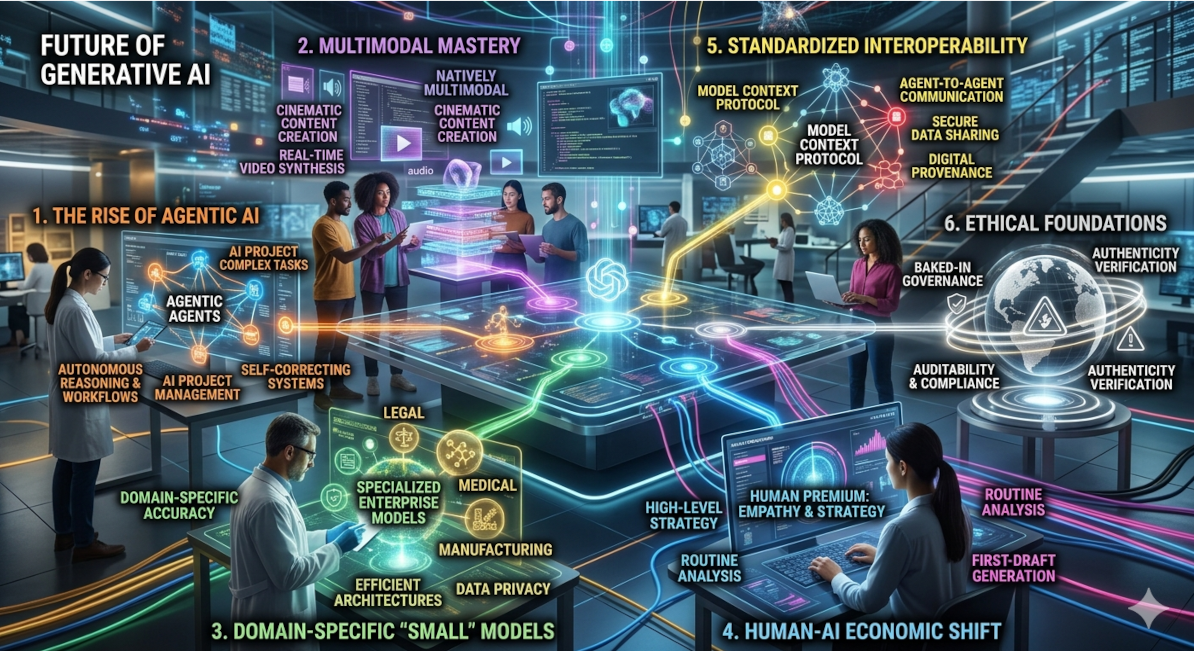
The future of generative AI is transitioning from a period of "novelty and hype" into an era of deep, structural integration. As we look toward the late 2020s, the technology is evolving from simple chatbots into sophisticated agentic systems
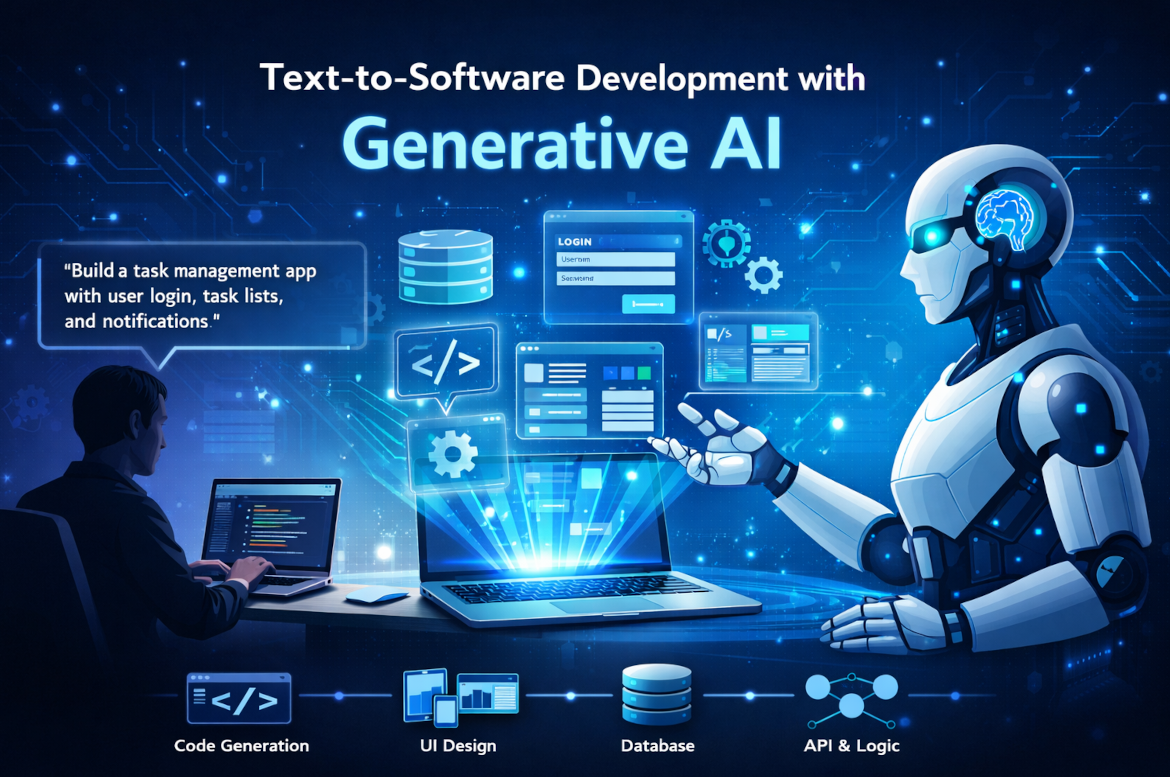
Software development has always evolved alongside new tools and technologies. From assembly language to high-level programming languages, from manual coding to frameworks and low-code platforms, each advancement has aimed to make building software faster and more accessible.
Today, Generative
The first thing Mira noticed about the new platform wasn’t the drag-and-drop interface or the pastel-colored buttons. It was the silence.
No frantic typing. No late-night arguments about semicolons. No one muttering curses at a compiler.
Just ideas—moving.
Mira
No-code and low-code platforms have rapidly transformed the software development landscape by making application creation faster, more accessible, and less dependent on traditional programming skills. These platforms use visual interfaces, drag-and-drop components, and pre-built templates to allow users to
© Glomex Technologies. All Rights Reserved.